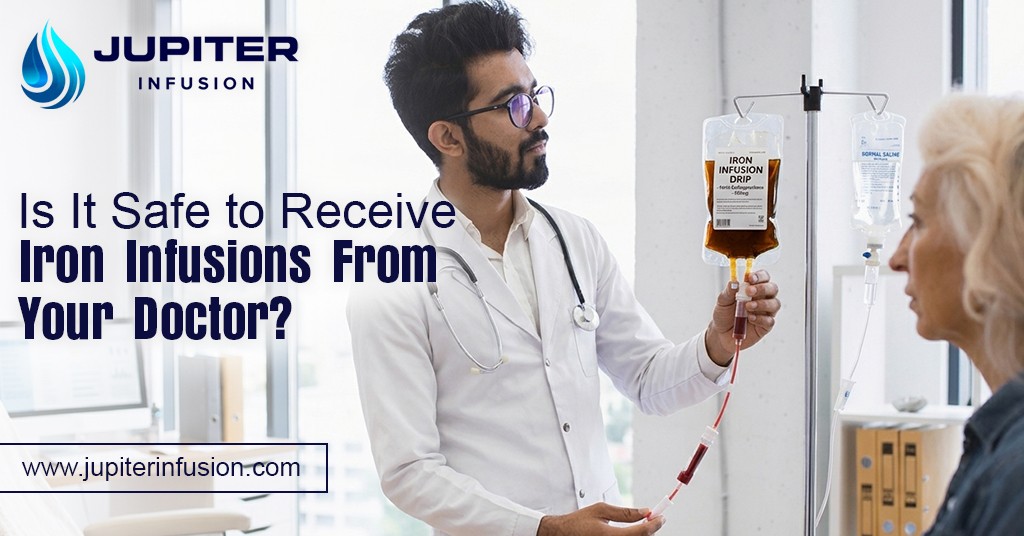
You've been to the doctor, and they've diagnosed you with an iron deficiency. They've told you that, rather than take a daily iron supplement, you need to get an iron infusion.
An infusion sounds worse than just taking a pill, right?
Well, sure. You're getting a needle in your arm, an IV line, and you're sitting in a clinic getting iron directly into your bloodstream without passing through the digestive system. It's no wonder you're concerned.
The short answer is that yes, iron infusions are generally safe. The iron products used for IV iron therapy (like Injectafer, Feraheme, and Venofer (iron sucrose)) are all FDA-approved and generally safe when administered in a clinic with staff monitoring you.
That said, it's not entirely risk-free. There are rare side effects and reactions that can happen.
Let's dig in and look at the real risks, both common and rare, as well as the benefits of this game-changing treatment!
Why Some People Need an Iron Infusion
Iron infusions are typically not the first line of treatment for iron deficiency. Your doctor will often recommend taking iron pills first, and only turn to infusions if:
- The pills don't improve your hemoglobin or ferritin levels
- You have side effects like constipation, nausea, or stomach pain
- Your iron deficiency is severe and needs to be addressed quickly
It can take months for pills to build up iron stores, after all. Infusions are also often the recommended treatment for people with Crohn's disease, chronic kidney disease (especially if they're on dialysis), or people who have heavy menstrual bleeding and lose iron faster than the pills can replace it.

If you have gut problems, why would it interfere with your ability to absorb iron pills? It's because iron is primarily absorbed in the duodenum and upper small intestine. Inflammation triggers the production of hepcidin, which inhibits the absorption of iron from the gut. One of the biggest pitfalls of trying iron pills first is that if you stop taking them without telling your doctor, they may not realize they aren't working and delay in switching to a different treatment.
What happens during an iron infusion?
Before your infusion appointment, you'll have blood work performed to measure your hemoglobin, ferritin, and transferrin saturation levels. This data is used to confirm that you need the infusion and to determine how much iron you will receive. You generally don't need to fast before an iron infusion, so you can eat and drink as normal before your appointment.
When you arrive at your appointment, the medical staff will place a small IV cannula in a vein in your hand or arm.
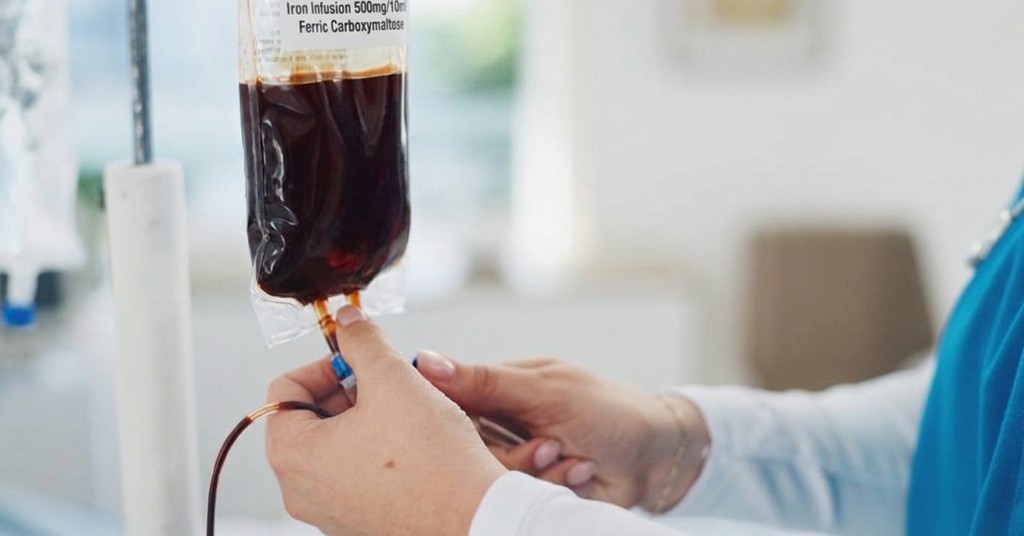
Depending on the product being used, your infusion can take a different amount of time. For example, iron sucrose (Venofer) is administered at 200 mg in 2-5 minutes, while ferric carboxymaltose (Injectafer) is administered over at least 15 minutes per dose, and ferric derisomaltose (Monoferric) is administered at 1,000 mg over at least 20 minutes.
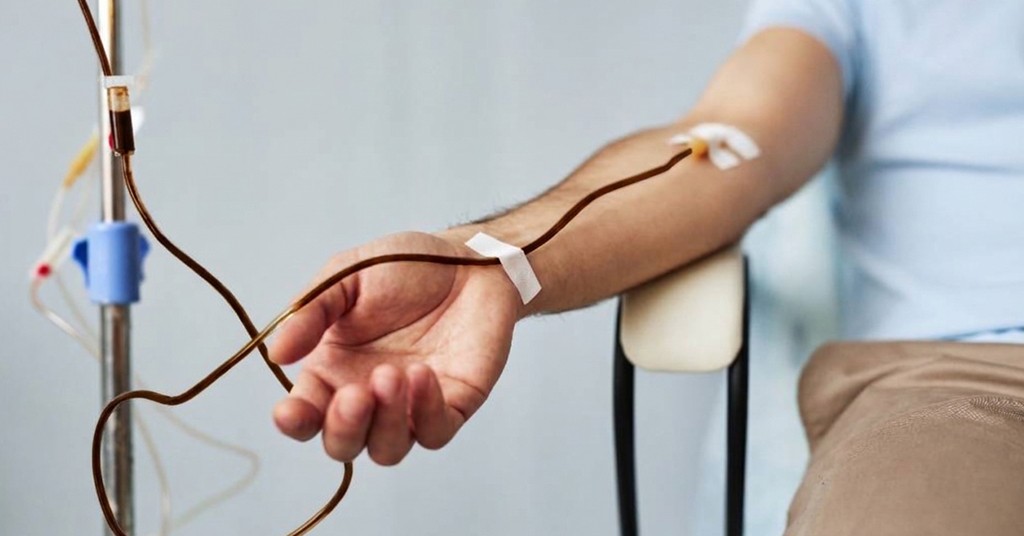
Depending on the product used, you may need to return for multiple visits to receive the full dose of iron you need. During the infusion, medical staff will monitor your blood pressure and pulse, and you will be observed for at least 30 minutes after the infusion is finished, as recommended by the EMA. This is because the medical staff will have both the training and the resuscitation equipment on hand to immediately stop the infusion and treat any reaction if necessary.
Depending on the infusion, your appointment can take an hour or more from start to finish. It's recommended to bring something to do, like a book or your phone, and to have a snack and water on hand.
Most people are able to drive home and resume normal activities after an iron infusion, but if it's your first time, you may want to bring someone with you. Check with your clinic for more information.
Side Effects That Most Patients Feel
Most of the side effects of iron infusions are mild and temporary, and go away on their own without any treatment.

Side effects to be aware of include:
- Headache - One of the most commonly reported side effects of iron infusions. Nausea, vomiting, or other stomach upset.
- Dizziness or lightheadedness during or shortly after the infusion.
- A temporary decrease in blood pressure, usually during the infusion. This can often be resolved by slowing or halting the drip.
- A metallic taste in the mouth, generally temporary.
- Flushing or mild chest or back tightness. This is a known side effect called the Fishbane reaction, and isn't an allergy - it generally settles down quickly.
- Delayed muscle or joint aches or a low fever within a day or two of the infusion. These delayed flu-like symptoms usually go away on their own in a few days.
- Staining on the skin at the site of the IV, which is a brown discoloration caused by the iron leaking out of the vein and into the surrounding tissue. This staining can last for months or years, or even be permanent.
- Burning, stinging, or swelling at the site of the IV. If this occurs, tell your nurse immediately, so they can stop the infusion and minimize the amount of iron that leaks out of the vein.
Less Common but More Serious Effects
A few side effects are not mild. Trouble breathing, throat swelling, or widespread hives are all possible allergic reactions to the iron infusion.

Ferric carboxymaltose has been known to cause low blood phosphate levels, which can cause fatigue, weakness, and bone pain. Some patients also report mild itching or a limited skin rash. Delayed muscle and joint aches can often be relieved with acetaminophen, but check with your doctor.
How Rare Are Serious Allergic Reactions
Anaphylaxis is a severe, body-wide allergic reaction. It happens within minutes of an exposure to an allergen. Signs of anaphylaxis include difficulty breathing, wheezing, swelling of the throat or tongue, hives, a sudden drop in blood pressure, dizziness, or fainting.
Fortunately, with modern IV iron, life-threatening allergic reactions are extremely rare. Experts estimate that fewer than about one in 200,000 doses of IV iron cause a life-threatening allergic reaction. (Auerbach, an iron researcher, has published this estimate.) The historical highest risk of allergic reaction was with high-molecular-weight iron dextran, which is no longer sold in the U.S. Some current products still carry the FDA's strongest warning, a boxed warning, for serious allergic reactions, including ferumoxytol (Feraheme) and low-molecular-weight iron dextran (INFeD).

Some people are at higher risk of anaphylactic reactions to IV iron. These include:
- People who have previously experienced such a reaction
- People with multiple drug allergies
- People with severe asthma, eczema, or atopy
- People with mastocytosis
- People with inflammatory diseases like lupus or rheumatoid arthritis
- Those receiving infusions at very high rates
Some patients experience a different kind of reaction, which is known as "Fishbane reactions" after nephrologist Steven Fishbane. These reactions involve short-term flushing, a tightness in the chest or back, and joint or muscle aches. However, they don't include wheezing, throat swelling, or a drop in blood pressure.
Fishbane reactions are much more common, occurring in about one in 100 infusions. However, they are generally harmless and tend to fade in a matter of minutes, often without the need for any medication. The usual response is to pause the infusion and resume at a slower rate.
Fishbane reactions are not true allergic reactions and do not involve IgE antibodies. Instead, they are likely the result of free iron in the body.
One note is that antihistamines like diphenhydramine can cause drowsiness and low blood pressure, which can mimic allergic reactions. Rampton et al. in Haematologica in 2014 wrote some excellent advice on how to differentiate between these reactions.
It is important to distinguish between a true allergic reaction and a Fishbane reaction. If a Fishbane reaction is misidentified as an allergic reaction, the patient's chart will be marked with an "iron allergy" and future IV iron therapy will be withheld even if indicated, leaving anemia untreated, oral iron ineffective, and blood transfusions a possibility.
Of course, even if a reaction isn't a true allergic reaction, it can be scary to experience. Chest tightness is especially alarming in the moment. If you experience any of these symptoms, make sure to speak up immediately. Your nurses will know what to do.
Who should be careful with iron infusions?
There are a few cases where you might need to be extra careful, or where you might not be able to receive iron infusions.
The biggest red flag is if you've ever had a reaction to an IV iron product before. If you have a known hypersensitivity to the specific product, that's a contraindication. If you've had a serious reaction to one IV iron product, you might not be able to take others. The European Medicines Agency's 2013 review concluded that all IV iron products have the potential to cause hypersensitivity reactions.
If you've had a reaction before, it's worth asking what kind of reaction it was. Was it a rash, or difficulty breathing, or something that knocked you out of commission?
A Fishbane reaction, described above, is not a true anaphylactic reaction.
The higher-risk groups listed earlier, such as people with multiple allergies or inflammatory conditions, also warrant extra care.
If you have an active infection, you will generally be advised to wait until it's been treated before receiving IV iron. This is because bacteria need iron to replicate, and additional iron in your bloodstream could promote bacterial growth. KDIGO guidelines for kidney disease specifically recommend against IV iron in the presence of an active infection.
People with iron overload (like those with hemochromatosis or those who receive frequent blood transfusions) shouldn't receive iron infusions. Why is too much iron bad? Because the body doesn't have an active mechanism for getting rid of it. It can only be excreted in blood or in cells that are shed. If you have too much iron in your system, it can build up in places like the liver, the heart, or the pancreas, leading to issues like cirrhosis, heart failure or arrhythmia, and diabetes.
You should be checked for ferritin levels and transferrin saturation before receiving an infusion. High ferritin alone might not be a sign of iron overload, but rather a sign of inflammation.
Finally, the first trimester of pregnancy is a time when the EMA recommends avoiding IV iron. The second and third trimesters are fine if oral iron isn't effective or well-tolerated. If the mother has a serious allergic reaction to IV iron, it can cause fetal bradycardia, which is why monitoring matters.
Precautions Your Doctor Can Take
Does this mean you shouldn't get an infusion? Not necessarily. Your doctor may be able to take additional precautions, such as administering the infusion at a slower rate, using a lower-risk formulation (like avoiding iron dextran), or simply observing you for at least half an hour after the infusion is complete, as the EMA recommends.

You are not typically given antihistamines before an infusion (since they can cause hypotension and mimic a reaction) so you can avoid masking a reaction.
Questions for Your Doctor About Iron Infusions
If you're considering iron infusions, it's a good idea to have a list of questions you want to ask your doctor. Even if you think you can remember them, it can be easy to forget in the rush of a medical appointment, so it's a good idea to write them down.
You're not being difficult by asking questions. It's part of the informed consent process for any medical treatment.
Here are some of the most important questions you should ask your doctor. Have I tried oral iron supplements long enough?
Iron supplements taken orally are the first line of defense, and the standard recommendation is to check if you're responding to them after 2-4 weeks. If you're not, it may be worth considering taking them every other day to increase absorption and reduce gastrointestinal side effects.
Also make sure you aren't taking your iron at the same time as something that inhibits absorption, like tea, coffee, calcium, or antacids. Which iron product are you giving me? In the United States, the available iron products are iron sucrose, ferric carboxymaltose, ferumoxytol, ferric derisomaltose, and INFeD.
Different iron products have different doses, different infusion times, and different side effect profiles. What happens if I have a reaction?
Serious allergic reactions are rare, but if they happen, your medical staff should have resuscitation equipment available.

Are you checking my phosphate levels?
One of the iron products, ferric carboxymaltose, has been linked to low phosphate levels. The PHOSPHARE trials found that around 75% of people given ferric carboxymaltose developed low phosphate levels, compared to around 8% of people given ferric derisomaltose, another IV iron product.
Repeated low phosphate levels have been linked to bone softening (osteomalacia) and fractures. How many doses will I need, and what follow-up testing will you do?
Iron sucrose typically requires multiple sessions. Ferric derisomaltose, on the other hand, may only need a single 1,000 mg dose.
Your doctor should also perform follow-up testing, like a repeat hemoglobin and ferritin test, usually several weeks after your final dose.
You should also ask about what is causing your iron deficiency. If you have heavy periods, gastrointestinal bleeding, or another issue that needs to be addressed, you should know about it.
The Bottom Line on Iron Infusions
So, let's go back to the beginning. You're sitting there, you're nervous about the needle and the IV line and the clinic chair, and you're worried about what might happen.
The honest answer is, yes, for most people, it's safe to receive an iron infusion in a monitored clinic setting. Serious reactions are rare. Minor reactions are common, but brief and manageable.
You won't feel better right away, because the iron needs to gradually build up your red blood cells over time. It will typically take a week or two for your hemoglobin levels to start to rise, and you may not feel better for several weeks. Blood work is usually performed around four weeks after the infusion to check the results, because checking ferritin too soon can show a falsely high reading.
Remember, too, that whatever is causing your iron deficiency still needs to be addressed. If you're losing blood through heavy menstruation, or if you're losing blood in your gastrointestinal system, you still need to find and treat the source of the problem.
Always discuss any concerns you have with your doctor. If you've had reactions to iron infusions in the past, or if you have allergies, asthma, or other lingering concerns, talk to your doctor about them.

At Jupiter Infusion, we're here to help. We provide infusion care led by physicians and overseen by board-certified doctor Dr. Loera. Our treatment plans are customized to your lab results and health history, and we provide our treatments in private, comfortable suites.
If you're interested in discussing whether or not an infusion is right for you, feel free to book an appointment online today. In the meantime, feel free to browse our blog for more evidence-based health insights.
References
- U.S. Food and Drug Administration. Reference ID: 5423309 - Venofer (iron sucrose) injection, for intravenous use. accessdata. fda.gov. 2024. https://www.accessdata.fda.gov/drugsatfda_docs/label/2024/021135s038lbl.pdf. Accessed November 12, 2026.
- Ems, T. Biochemistry, Iron Absorption. StatPearls - NCBI Bookshelf. 2023. https://www.ncbi.nlm.nih.gov/books/NBK448204/. Accessed November 12, 2026.
- Hurrell, R F. Influence of Inflammatory Disorders and Infection on Iron Absorption. PMC - NIH. 2012. https://pmc.ncbi.nlm.nih.gov/articles/PMC4353607/. Accessed November 12, 2026.
- U.S. Food and Drug Administration. MONOFERRIC (ferric derisomaltose) injection, for intravenous use. accessdata. fda.gov. 2024. https://www.accessdata.fda.gov/drugsatfda_docs/label/2024/208171s003lbl.pdf. Accessed November 12, 2026.
- European Medicines Agency. Intravenous iron-containing medicinal products - referral. European Medicines Agency. https://www.ema.europa.eu/en/medicines/human/referrals/intravenous-iron-containing-medicinal-products. Accessed November 12, 2026.
- U.S. Food and Drug Administration. FDA Adds Boxed Warning to Labeling for Ferric Carboxymaltose Injection to Describe Risk of Low Blood Phosphate Levels. FDA.gov. https://www.fda.gov/drugs/drug-safety-communications/fda-adds-boxed-warning-labeling-ferric-carboxymaltose-injection-injectafer-describe-risk-low. Accessed November 12, 2026.
- Kidney Disease: Improving Global Outcomes (KDIGO). Adverse Events with IV Iron. kdigo.org. https://kdigo.org/wp-content/uploads/2017/02/13.-Auerbach_Management-of-Iron-Hypersensitivity.pdf. Accessed November 12, 2026.
- Rampton, D. Hypersensitivity reactions to intravenous iron. Haematologica. 2014. https://haematologica.org/article/view/7194/43693. Accessed November 12, 2026.
- Auerbach, M. On the safety of intravenous iron, evidence trumps conjecture. Haematologica. 2015. https://haematologica.org/article/view/7396. Accessed November 12, 2026.
- Kidney Disease: Improving Global Outcomes. KDIGO Clinical Practice Guideline for Anemia in Chronic Kidney Disease. kdigo.org. 2012. https://kdigo.org/wp-content/uploads/2016/10/KDIGO-2012-Anemia-Guideline-English.pdf. Accessed November 12, 2026.
- European Medicines Agency. Iron Containing Intravenous (IV) Medicinal Products - Article 31 Referral Assessment Report. European Medicines Agency. 2013. https://www.ema.europa.eu/en/documents/referral/intravenous-iron-containing-medicinal-products-article-31-referral-assessment-report_en.pdf. Accessed November 12, 2026.
- Zoller, H. Hypophosphataemia following ferric derisomaltose and ferric carboxymaltose. PMC - NIH. 2022. https://pmc.ncbi.nlm.nih.gov/articles/PMC10086283/. Accessed November 12, 2026.
- American Society of Hematology Publications. Oral iron supplements increase hepcidin and decrease iron absorption. Blood. https://ashpublications.org/blood/article/126/17/1981/34441/Oral-iron-supplements-increase-hepcidin-and. Accessed November 12, 2026.
- Jimenez, K. Management of Iron Deficiency Anemia. PMC - NIH. 2015. https://pmc.ncbi.nlm.nih.gov/articles/PMC4836595/. Accessed November 12, 2026.
- Muñoz, M. Current misconceptions in diagnosis and management of iron deficiency. PMC - NIH. 2017. https://pmc.ncbi.nlm.nih.gov/articles/PMC5589705/. Accessed November 12, 2026.