If you're a golfer and you're starting to wince when you take those steps to the 9th green, or you're starting to have aching in your knee after a round and stiffness the next morning, you know something is wrong. Maybe you're starting to ride the cart instead of walk, or you're cutting your rounds short. But the fear is there. You're starting to lose the game you love.
Do you go with stem cell injections, non-invasive and with minimal downtime? Or do you go with a total knee replacement, with major surgery and a longer recovery? There's a middle ground, too. The question is, why do so many golfers wait too long to take action? Is it because you blame your pain on getting older? Or are you afraid of surgery? Either way, we're here to give you an honest look at both options, the hype and the reality, so you can get back on the course the right way.
Why Does Your Lead Knee Take Such a Beating?
The lead knee (the left knee for right-handed golfers) takes a lot of abuse during the swing. Your lead foot is planted while you twist your hips and torso towards your target, which rotates your femur over a stationary tibia, twisting rather than just bending your knee.

During the impact of your swing, your lead knee braces and straightens to absorb the impact of the swing.
When your knee braces and straightens, it actually pushes outwards, putting more pressure on the inner side of the knee. Since the medial compartment of your knee is already doing most of the work when you walk, it's not surprising that this is where the cartilage wears down first, leading to the classic bow-legged appearance of arthritis.
Tiger Woods, for example, has had his left (lead) knee operated on several times, including an ACL reconstruction. He even won the 2008 U.S. Open with a torn ACL and stress fractures in his tibia.
Other Risk Factors Beyond the Swing
Other aspects of golf also put a lot of pressure on the lead knee. Walking the course, especially if it's hilly, can put a lot of pressure on the knee joint when you're walking downhill. Playing off of a slope also puts the knee in an awkward position for every swing.
In addition, any old injuries you may have had can affect your risk of arthritis. If you've torn your meniscus or ACL in the past, you're more likely to develop arthritis, especially if you've had surgery on your meniscus and have less cushioning cartilage left.

Your weight also matters. For every pound of weight you lose, you take about 4 pounds of pressure off your knees with every step you take (Messier, 2005).
Of course, you're not necessarily at fault for having thousands of golf swings put into your knees over the course of decades. You're just getting some mileage on them. The trouble is, when you start to feel some swelling after a round, it's easy to write it off as "just getting older" when that swelling (known as effusion) is a sign that something is irritating your knee and should be evaluated.
Try a Few Lower-Risk Options Before Surgery
Before you go in for injections or surgery, it's worth exploring a few lower - risk options to see if you can address your knee pain through other means.
Swing modifications. Working with a PGA teaching pro or a golf - specific fitness coach can help you figure out what changes to your swing can reduce pressure on your knee. Adjustments like flaring out your lead foot to minimize twisting, allowing your lead heel to rise on your backswing like Jack Nicklaus, or even just shortening your backswing to minimize the snap of the lead knee straightening at impact can all help.

Spikeless or soft-spike shoes. Spikeless golf shoes or shoes with soft spikes can reduce the grip you have with the ground, so you aren't twisting as hard. Cushioned and supportive shoes can also help minimize the impact of walking 18 holes.
Lateral wedge insoles. This is one of the options the AAOS guideline does not recommend.
Hyaluronic acid injections. Hyaluronic acid, a joint lubricant, is available in injected forms like Synvisc and Euflexxa. The 2021 AAOS guideline says "Hyaluronic acid should not be used as a routine treatment for knee osteoarthritis." Some people do report that it can provide relief for months. But others don't get any benefit at all.
Physical therapy exercises. This is strongly recommended by the AAOS.
Why do the hips matter? If your gluteus medius muscle is weak, it can allow your knee to collapse inward, which puts more of the pressure of your swing and walking on the knee. Likewise, if your lead hip is tight and doesn't rotate, your knee will take more of that pressure. In fact, a study from Bennell et al. in 2010 found that strengthening the hip muscles in patients with medial knee osteoarthritis helped reduce pain.
Some people find relief with these options, while others don't. Moreover, none of these options will regrow cartilage, so hyaluronic acid and swing modifications may only delay the need for a bigger decision.
What Do Stem Cell Shots Actually Do
Stem cell "shots" are procedures where stem cells are harvested from either the patient's own body or from a donor, and injected into the joint in the knee. Bone marrow aspirate concentrate, or BMAC, is a procedure where stem cells are harvested from bone marrow in the hip bone, concentrated, and injected into the knee. Another option is to harvest adipose, or fat cells, from the patient's own body, using a mini-liposuction procedure, processing them, and injecting them into the knee.
There are also donor products.
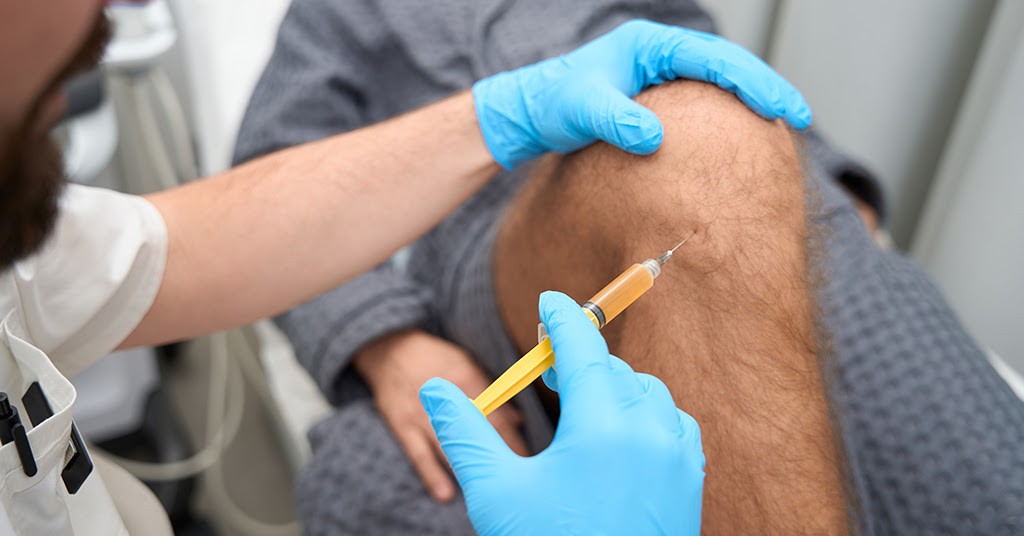
Even with BMAC, the actual mesenchymal stem cells in the concentrate are a tiny fraction of the cells present. The theory is that the stem cells help calm inflammation and cell signaling, rather than actually turning into new cartilage.
There's also PRP, or platelet-rich plasma. PRP is a procedure where blood is harvested from the patient, spun in a centrifuge to separate the blood components, and the layer of platelets is harvested and injected into the knee. Platelets carry growth factors like PDGF, TGF-beta, and VEGF, which are meant to stimulate healing in the joint. PRP is usually a series of 1-3 injections, sometimes with ultrasound guidance.
What the Research Shows
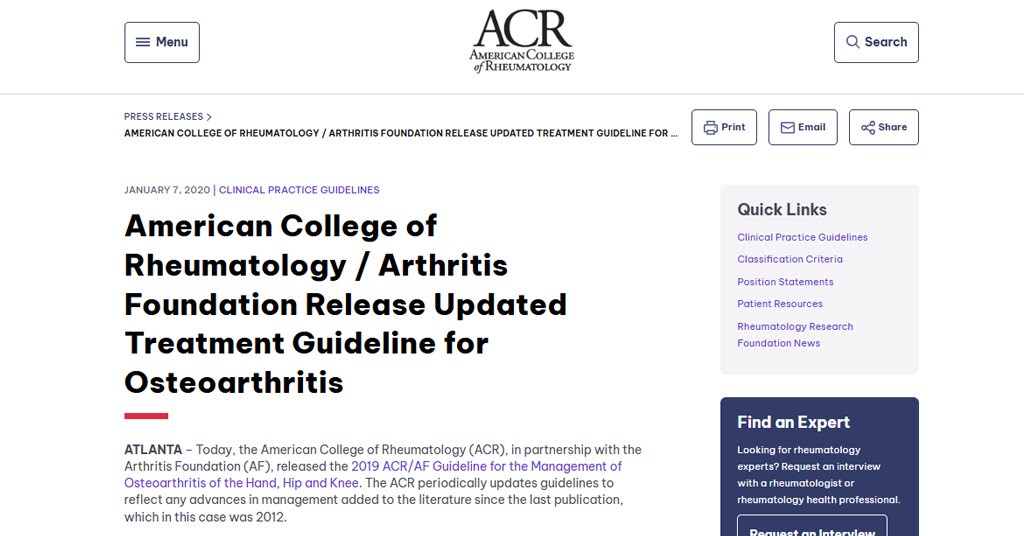
What does the science say? The American College of Rheumatology and the Arthritis Foundation published a guideline in 2019 that strongly recommends against stem cell injections and PRP injections, citing a lack of standardized preparations and inconsistent results in studies.
The American Academy of Orthopedic Surgeons published a guideline for knee osteoarthritis in 2021, stating that PRP "may" be beneficial for pain and function. But the evidence is limited in strength. They also say that there is not enough evidence to support stem cell injections.
The RESTORE trial, published in JAMA in 2021, studied 288 patients and compared PRP injections to saline placebo injections, and found no meaningful difference in pain or cartilage on MRI at 12 months.
A trial published in Nature Medicine in 2023, using 480 patients, compared injections of bone marrow cells, fat cells, or cord tissue cells to cortisone injections. The cell injections were no better than a steroid shot at one year, and there was no evidence on MRI of cartilage regrowth.
Other studies show promise in reducing pain, sometimes for months, though rarely permanently. The best results tend to be in people with mild to moderate arthritis, not in people with bone-on-bone arthritis.
The FDA has stated that the only stem cell products they approve are cord blood cells for blood disorders. They've also issued public warnings about unapproved stem cell products and marketing by stem cell clinics.
There have also been reports of serious infections and even blindness from unapproved stem cell injections in the eye. The CDC also reported in 2018 that 12 patients developed bacterial infections from umbilical-cord product injections.
PRP is not FDA-approved for knee arthritis, though the devices that spin the blood to extract platelets are approved for other purposes and can be used off-label.
Appeal, Side Effects, and Cost
Stem cell injections and PRP can be attractive for golfers because they don't require an incision, hospital stay, or general anesthesia. They're outpatient procedures that can often be performed in an hour or so, including the blood draw or fat harvest. Patients can typically walk out the same day and return to light activity in just a few days, compared to the weeks or months of rehab required after a replacement before they can swing a club again.
Side effects of stem cell and PRP injections include post-injection flare, swelling, and stiffness for a few days, and pain in the area where the stem cells were harvested if a bone marrow or fat procedure is performed.
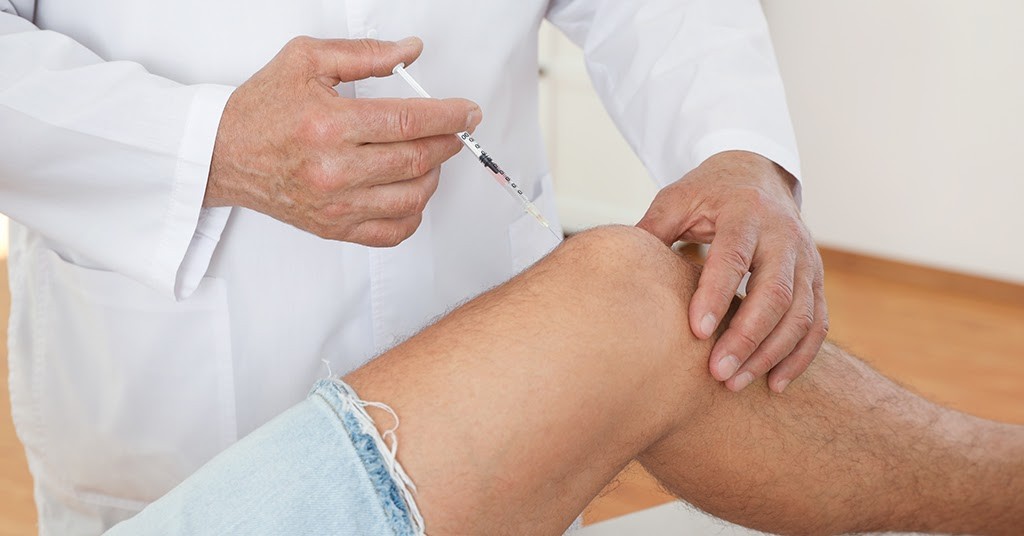
Stem cell and PRP injections also tend to be expensive, with PRP typically costing between $500 and $2,000 per injection, and stem cell procedures costing several thousand per knee. Insurance, including Medicare, rarely covers them as they're considered investigational.
- Claim to be able to "regrow cartilage" or make cure claims
- Pressure you into paying before the procedure
- Rely on testimonials rather than clinical studies
Ask questions about where the stem cells come from, what published evidence is available, who performs the injections, and how long you can expect them to last.
Remember, too, that stem cell injections and PRP do not stop advanced arthritis from progressing. You may still need a replacement down the line.
How Soon Can You Golf After Knee Replacement?
Total knee replacement is a procedure that replaces the worn-down ends of the femur and tibia with metal components and a polyethylene spacer. The kneecap is also frequently resurfaced. By eliminating the bone-on-bone contact that causes so much pain, this is one of the most reliable and predictable treatments for end-stage arthritis, with high patient satisfaction rates.
The average return to golf for knee replacement patients is somewhere between three and six months. In a 1993 study published in the Journal of Arthroplasty, Mallon and Callaghan surveyed active golfers who had received knee replacements and found that most of them returned to golf, often using a golf cart. Patients reported more pain in the lead knee than in the other knee.
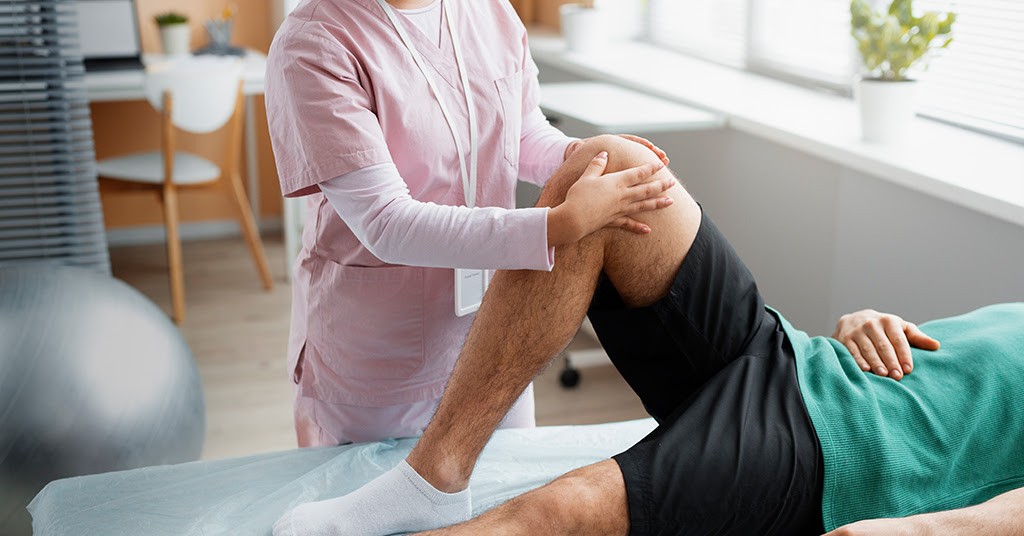
Knee replacement rehab is intense. Patients are often up and walking within a day of surgery. But they must undergo weeks of physical therapy. Stiffness can be an issue, so working on range of motion as soon as possible is critical. It's also important to go easy on forceful twisting with the lead knee, and using an open stance and soft spikes can help.
Some patients are afraid of knee replacement surgery. But it's not as bad as it sounds. Many surgeons use spinal anesthesia and nerve blocks, and the procedure can be performed as an outpatient.
Does Your Age Matter for Knee Surgery?
One of the most important considerations when it comes to a knee replacement is how long the implant lasts. Most total knee replacements last 15-20+ years. In fact, a 2019 study in the Lancet that pooled data from several national registries found that around 82% of total knee replacements last 25 years.
If you're a golfer in the prime of your life and you have a knee replaced at age 55, you could very well outlive the implant by decades.
This is a huge concern. In 2017, a study by Bayliss et al. in the Lancet found that men aged 50-54 have an estimated 35% chance of needing a revision surgery at some point in their life. The younger and more active you are, the higher the risk of needing a revision.
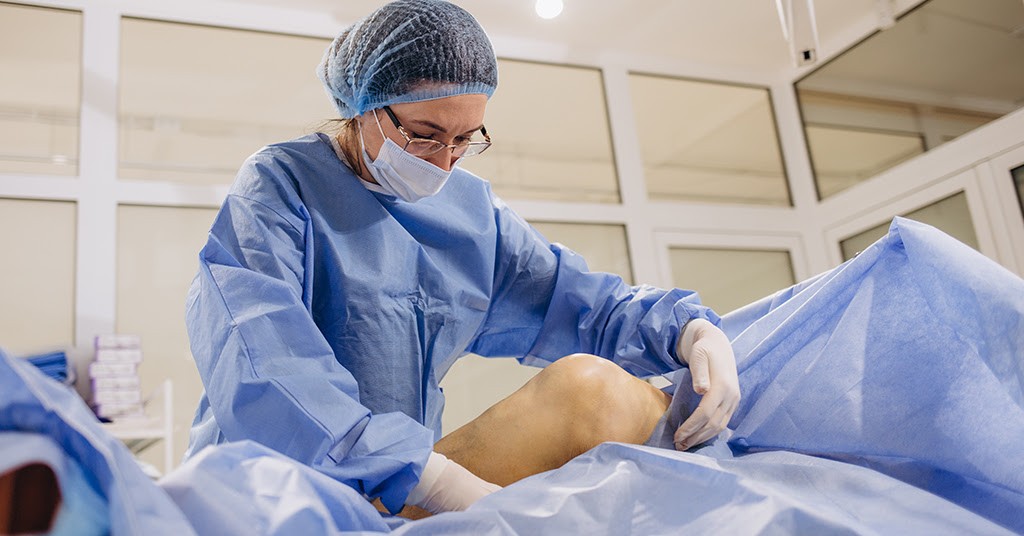
A revision surgery is worse than the original surgery, with more bone loss, a longer recovery, and less predictable results. The average patient getting a knee replacement in the United States is in their mid-to-late 60s, for good reason. In the meantime, if you want to put off surgery and carry on, what options do you have?
- Weight loss
- Strengthening your quads and hips
- Physical therapy
- Cortisone injections, which can provide weeks or months of relief, though they're limited in how many you can get in a year
- An unloader brace, if your arthritis is in the medial compartment
If you're younger and active, bowlegged, and have arthritis in the medial compartment, a high tibial osteotomy can be a good option. If your arthritis is limited to one compartment of the knee, a partial or unicompartmental knee replacement can be a viable option.
The swing and equipment changes covered earlier can also buy you time. How many more years of golf do you want to get out of your knees?
One pitfall to delaying surgery is that the longer you wait, the more the stiffness, deformity, and loss of muscle in your knee can make your surgery less effective. Waiting too long can also eliminate the option of a partial knee replacement or osteotomy.
Get Back on the Course Your Way
So, what's the choice here? Injections have promise. But not much long-term data. Replacement has a defined road back, with some potential long-term limitations.
If you're just starting to experience knee arthritis from golf, remember that simple solutions like physical therapy, building up hip strength, and adjusting your swing can all go a long way.
If you're a little further along, consider the timeline. The more bone-on-bone your knee is, the less likely injections are to help.

With injections, you can have a quick procedure, take a few days off, and start working your way back up. If they help, you'll start to feel the effects building over a few weeks. But they may fade over time. You'll be paying out of pocket for them, and it can be thousands of dollars.
With replacement, you'll be walking with a walker or cane within a day, with weeks of physical therapy to follow. You can start putting and chipping before too long. But you probably won't be back to full rounds for three to six months. You may have some limitations, such as discomfort kneeling or having to ride a cart on hilly courses.
However you choose to handle it, you can still keep playing. Jack Nicklaus didn't let a hip replacement in 1999 stop him from playing, and neither should you!
At Jupiter Infusion, here in Jupiter, Florida, we're here to help. Our board-certified physician Dr. Loera leads our team, and we're here to build a personalized plan for you, based on your biology, to help you recover, maintain your performance, and live a healthy life for as long as you can. Whether you go the stem cell route, the replacement route, or something else entirely, we're here to help. We offer IV hydration and wellness, NAD+, peptides, bioidentical hormones, and more, all in our private and relaxing suites. All you need to do is book your visit online. You can also follow our blog for more insights into longevity and performance.