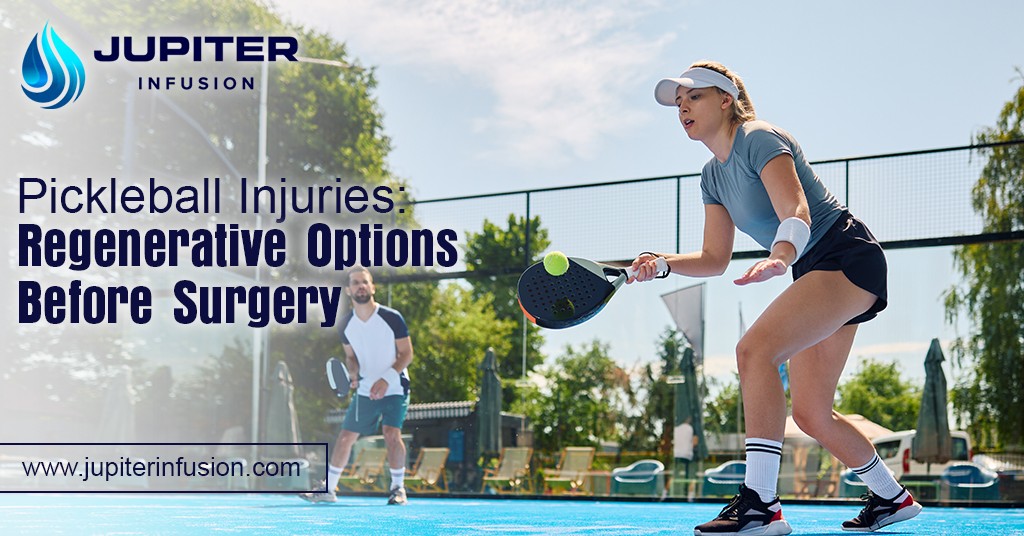
Pickleball injuries can show up in a split second or over time - a sharp pop at the kitchen line or a shoulder that slowly loses range after months of standard play. Most players' minds go right to the operating room - and that fear alone is usually enough to send them looking for a different answer.
Surgery means weeks off the court, a long and usually frustrating recovery and no guarantee that you'll come back feeling like yourself. It only makes sense to want an alternative - and the options out there have come a long way.
Regenerative treatments like platelet-rich plasma (PRP) and prolotherapy have earned their place in orthopedic care - especially for the types of injuries that pickleball tends to cause. A 2024 Rothman Orthopaedic Institute review found that most pickleball injuries actually get resolved without surgery and yet patients walk into clinics every day convinced that an operation is their only path forward. Patients deserve to know the full picture - and what's medically possible versus what they walk in believing is worth talking about.
The path forward can depend on three factors - which injuries respond well to these treatments, how combining these treatments with physical therapy can get you the best results and when surgery is the right call. Nail all three of these and plenty of players can realistically expect to be back on the court within months - not years.
Let's talk about how regenerative treatments could help you heal without going right to surgery!
The Strain That Pickleball Puts on Your Body
The same movements that make pickleball so fun are also the ones most likely to get you hurt. Quick lateral steps, sudden stops at the kitchen line and sharp overhead swings - all of it puts stress on your joints and soft tissue. Play like that five days a week with little rest, and the wear builds up pretty fast.
Part of what makes this important is the demographic that's out there playing. Many pickleball players are over 50. That's not a knock on the sport at all - it's just helpful context. Most of them have worked their way back into steady physical activity after a long break from it. Plenty of players show up with enthusiasm, and that's great. But they skip the warm-up and go straight into competitive play. A body that hasn't been pushed hard in a few years doesn't always love that cold start.
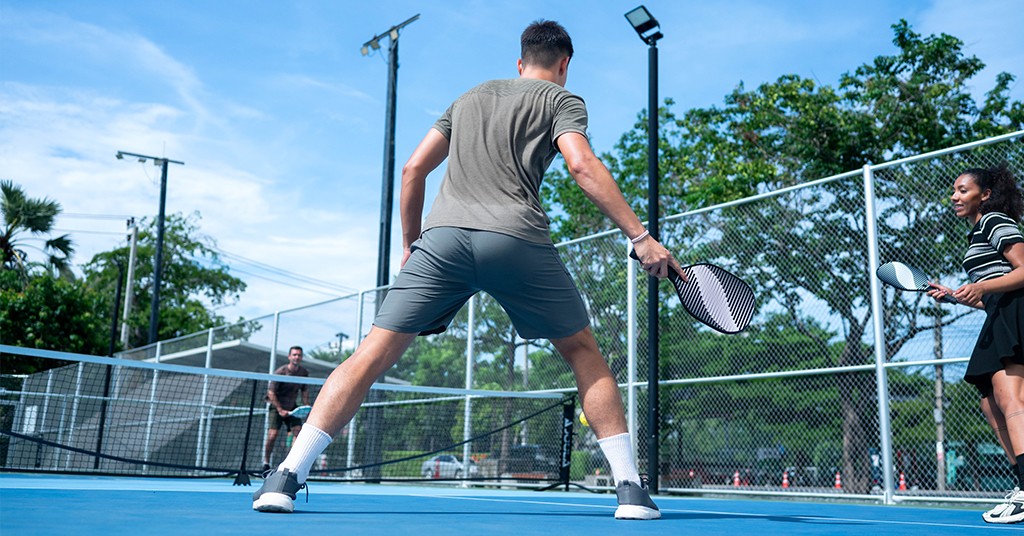
A 2021 study published in the journal Injury Epidemiology found that pickleball-related ER visits in the U.S. were on a steady rise and older adults made up most of the cases. A pattern like this doesn't get the attention it deserves - you have retirees who now put more hours on the court each week than they ever spent at the gym. It's a wonderful sight to see.
Even so, the joints have a long memory, and the gap tends to catch up eventually.
The Most Common Pickleball Injuries
Pickleball is very tough on the body, and the same injuries show up over and over regardless of age or skill level.
The Achilles tendon is one of the most vulnerable areas on the court. Those quick stops and forceful pushes off the back foot put strain on it over time until something goes wrong. Tightness and soreness at the back of the heel are early signs that something is building up. A partial tear is bad enough, but a full rupture can sideline you for months.
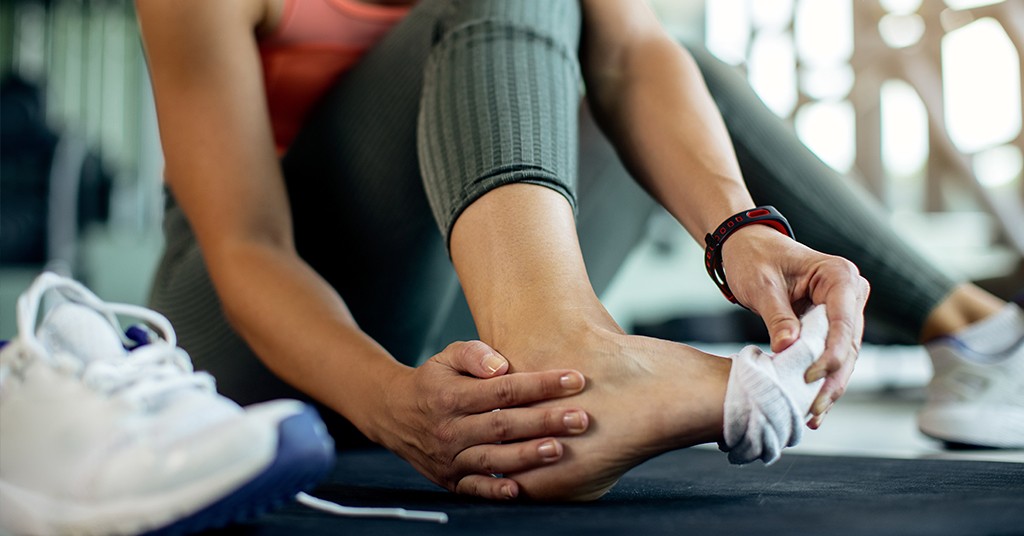
The knees take a beating. Meniscus damage tends to develop slowly over time, and the biggest red flag is pain along the inside or outside of the knee - pain that flares up any time you twist or pivot. The shoulder is another problem area, and that's especially true for anyone who puts spin and power into their shots. Rotator cuff strains usually start as a dull ache on your overhead swings, and left unaddressed, they will get progressively worse.
Elbow pain is common too, and players have started calling it "pickleball elbow." It's closely related to tennis elbow, and the research behind tennis elbow actually tells us quite a bit about why lateral elbow pain like this develops - and why it can be so stubborn to get rid of. The root cause nearly always traces back to repetitive grip and wrist motion.
What I hear most is that players admit they pushed through the pain for months before they finally looked for help. Many of them didn't want to let their doubles partner down, and that's hard to argue with.
How the Body Heals With Regenerative Care
Tendons and ligaments are notoriously slow healers, and the reason is pretty simple - they don't get much blood flow at all. Blood is what carries the repair cues and nutrients that your body needs to fix damaged tissue, and when very little of it reaches an injury, the whole recovery process ends up dragging on for quite a few months.
Regenerative care works from a very different angle. The whole point is to work alongside what your body is already doing. These treatments put concentrated healing agents right where the injury is, and this direct reinforcement can legitimately improve how well and how fast your body heals.
Age matters here as well. As the body gets older, its natural ability to heal itself at full speed starts to slow down, and it may need a little extra help to get the repair process going again.
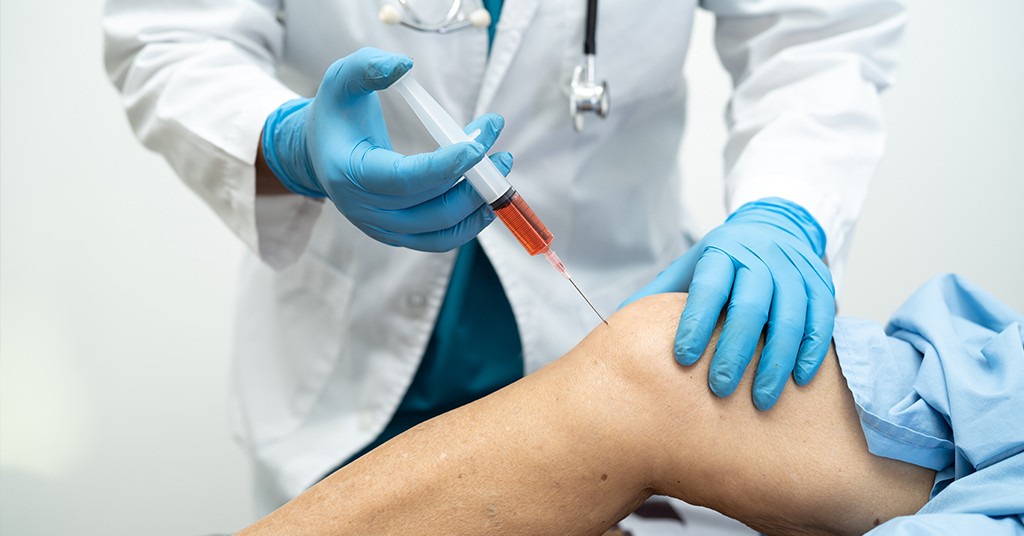
The cortisone shot is usually the first option patients try, and it makes plenty of sense - the relief tends to come fast, and it can be pretty dramatic. Sometimes that's just what you need. A 2010 review published in The Lancet pointed out something worth keeping in mind - cortisone injections may actually lead to worse long-term results for some tendon injuries. For anyone who is weighing repeated injections, that's a legitimate trade-off that deserves some careful thought before making the choice.
Of everything we've covered, the part that tends to give some comfort is this: the body never fully loses its ability to repair itself.
How PRP Treats Tendons and Ligaments
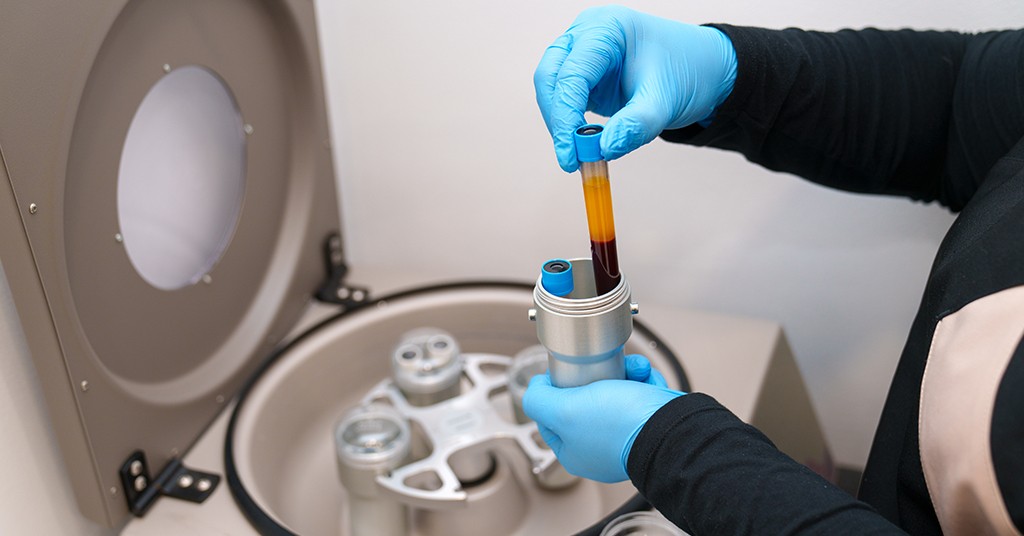
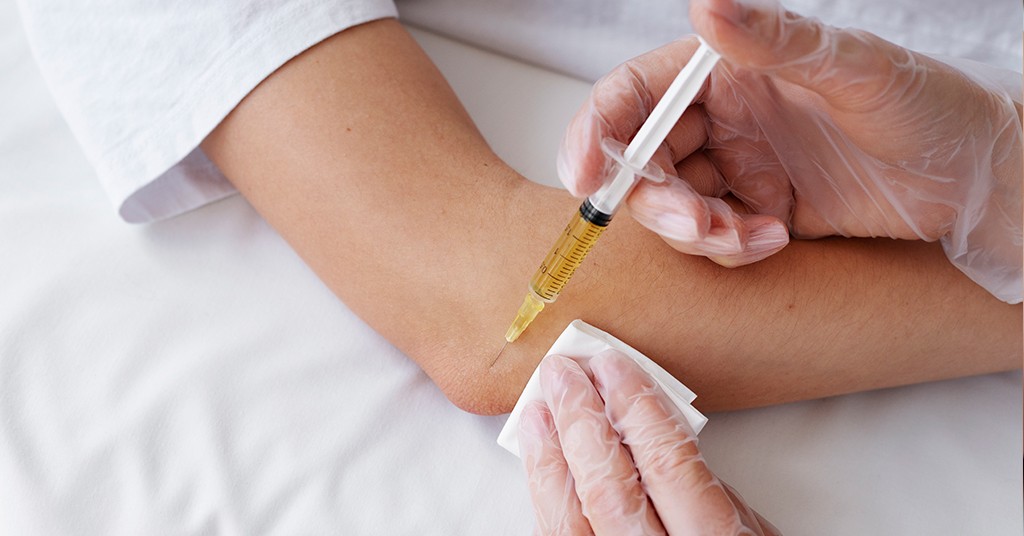
Platelet-rich plasma therapy (or PRP as we call it) is a pretty easy procedure that starts with a basic blood draw from your arm. That blood gets put into a centrifuge that spins fast enough to separate out the platelets and growth factors from the rest of it. A doctor then takes that concentrated solution and injects it directly into the damaged tissue.
Tendon injuries are one of PRP's stronger points, and tennis elbow in particular has a body of research behind it. A 2010 clinical trial by Peerbooms found that PRP outperformed cortisone injections for tennis elbow over the long haul - which is especially relevant since cortisone has been the default treatment of choice for a long time.
Tiger Woods and Hines Ward are two of the more recognizable names to have used PRP for their injury recovery. That high-profile attention helped bring it into the mainstream. But the main reason to take PRP has very little connection to who's endorsing it. The science is what actually backs it up, and it stands on its own.
Results can vary from person to person, and it's worth being honest about that. Your age, the extent of the damage and how well your body responds to the treatment all matter. The cost can climb pretty fast, since some patients need more than one injection before they see any real difference. PRP is almost never covered by insurance, so make sure that you've thought about the pricing before going ahead with anything.
One more point - you're not alone if needles make you nervous. The injection itself is extremely precise, and many clinics will use imaging to guide it to the right area. Before your appointment, it's worth asking your provider to run you through what happens so you feel a bit more comfortable going in.
Prolotherapy for Joints That Feel Loose or Weak
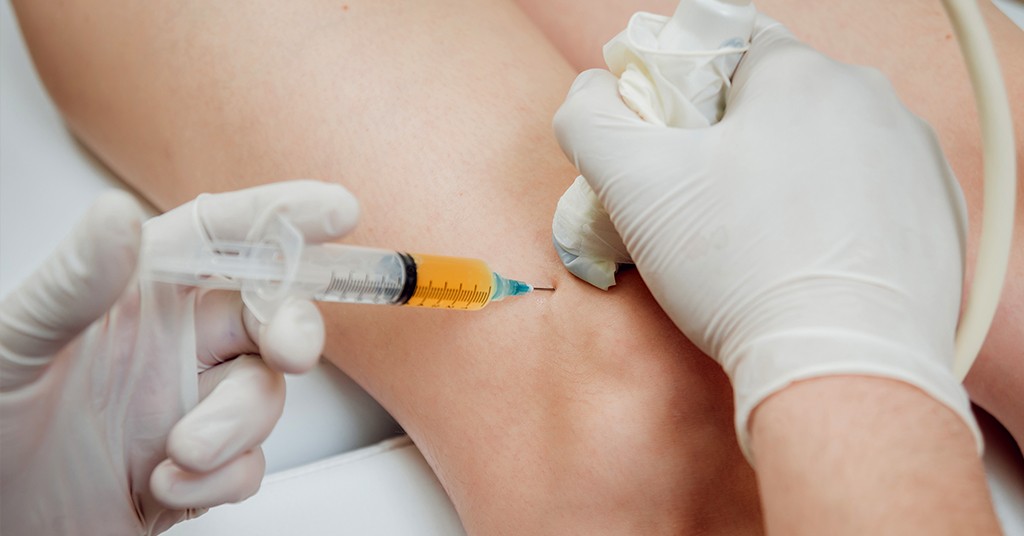
Prolotherapy works a bit differently than PRP. But the idea behind it is just as simple. A doctor injects a dextrose solution (just sugar water) directly into the damaged joint. This triggers a mild inflammatory response that the body reads as a signal that something needs attention. From there, it routes some healing resources to that area and starts to rebuild the tissue that's become weakened or unstable.
George Hackett was a physician who devoted decades to this starting back in the 1950s, and he's largely credited with the work that brought prolotherapy into clinical practice. A researcher named David Rabago published studies showing actual improvement in patients with knee arthritis who had received dextrose injections. The evidence is still limited.
Pickleball players can get quite a bit out of prolotherapy, and it tends to help most with knees and ankles that feel unreliable on those quick lateral cuts - the type of move where your body hesitates for just a fraction of a second.
Prolotherapy tends to cost less than PRP. You'll usually need more visits spread out over a longer period. That trade-off is worth thinking through before you settle on any plan - and from what I've seen, patients who go in with realistic expectations are more likely to stick with it long enough to actually get some results.
A post-injection flare is one part of the process that tends to confuse patients. The joint might feel worse for a few days after the shot. That's expected, and it means that the treatment is doing its job. The inflammation is doing what it should at this stage, and the discomfort is temporary - it will fade on its own as a normal part of recovery.
Start at a Lower Level Before Full Play
These treatments work best as part of a bigger plan. Regenerative injections like prolotherapy are helpful for jumpstarting the repair process. But physical therapy and better training habits are what actually carry that progress forward. Most recovery timelines run anywhere from 3 to 6 months - a window that tends to be far longer than players want to accept. From what I've seen, the hardest part is the wait.
The Finnish FIDELITY trial is an example of this. The scientists found that patients who had surgery for worn meniscus tears did no better than patients who received a sham procedure - a fake surgery. A result like that raises a pretty uncomfortable question about how frequently we try surgery when the body just needed more time and the right support.
Patience is one of the hardest parts of recovering as a pickleball player - and the social side of the game is a big part of why. The community, the competition and the weekly rhythm - it all tends to build fast. Before long, the pull to get back out on the court starts to feel more like a need than a want. That's usually where recovery starts to fall apart.
A few weeks of feeling better is not the same as being healed - the tissue is still in a pretty early stage of repair at that point, and a return to full play too soon can undo that progress. A few small adjustments can help - fewer days on the court each week, a lighter paddle or just a step back from singles to cut back on the physical demand a bit.
A gradual return is just how the process works.
Sometimes Surgery Is the Right Move
Regenerative treatments matter - and for many injuries they do deliver. They're just not the right answer for every situation. Some injuries actually call for surgery, and in those cases, sooner will be better.
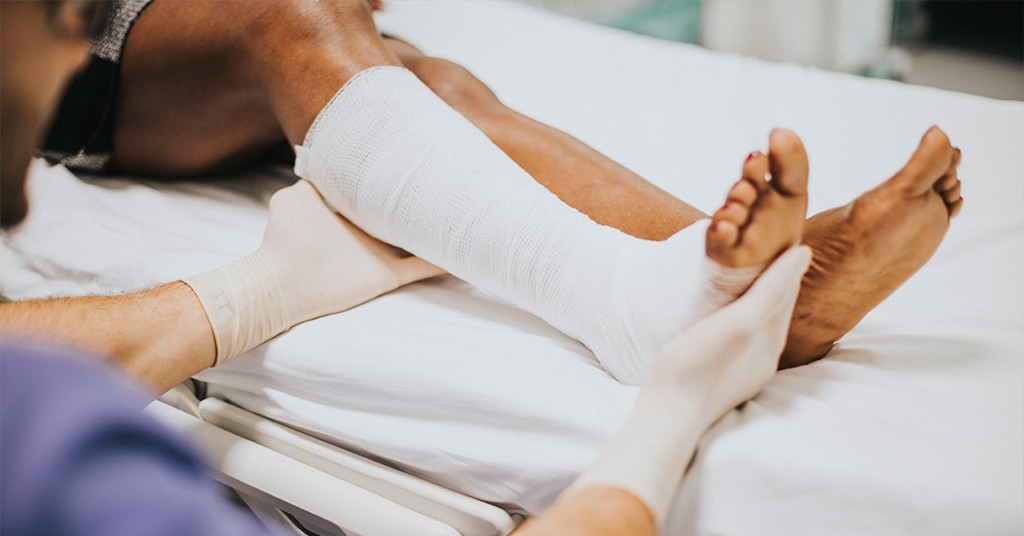
A large rotator cuff tear, a knee that locks up or a tendon that flat-out won't respond after months of honest rehab - at some point those are signs that conservative care just won't be enough on its own. And in cases like these, a long delay can make a surgical repair harder to perform and much harder to recover from. That's something worth keeping in mind if progress has been stalled for a while.
The research on this is legitimately mixed, and it's worth saying that from the start. A 2010 study by Willits found that non-surgical rehab for Achilles tendon ruptures showed results that were roughly on par with surgery for quite a few patients - and the two options still don't work the same way for every person. The severity of the tear, your age, your activity level and how your body responds to early treatment can all have a say in which direction is the right call.
Regenerative care doesn't have to end once a surgery is over either. A treatment like PRP can still help quite a bit during the recovery period - it may help your body repair tissue faster and get a lot more out of the rehabilitation ahead of you.
Still, that limit's worth accepting.
A Full Recovery Is Within Your Reach
The path forward just takes a few steps - work out what you're up against, give regenerative care and physical therapy a genuine chance and be honest with yourself about when it's time to escalate. That last part is the step that most players either skip altogether or stall on. Athletes who move through that sequence (without jumping right to surgery and without just brushing the injury off) usually come out on the other side in much better shape.
The best place to start is figuring out what matters the most to you. Some players care most about getting back on the court as fast as possible. For others, it's about cost or a genuine preference to stay out of a surgical center when there's a decent option available. Neither answer is wrong. The conversation with your provider gets a whole lot easier once you know what you want, and it helps the two of you put a plan together that fits your life.

The players who come back strongest are nearly always the ones who didn't skip any steps. They took the injury for what it was from the start, stayed patient through the slower parts of their recovery and didn't let frustration make the call for them. Plenty of these players are back at the kitchen line now - and some of them are actually playing better than they were before because at some point in that whole process they developed a much better feel for how their body works. A full recovery is common, and it's worth keeping in mind on the days when the timeline starts to feel like it'll never end.
When you want the right support on your path through recovery, Jupiter Infusion takes a physician-led approach to regenerative and wellness care and builds each treatment plan around what you need and where you want to end up. Dr. Loera and our team are here to get you back to the activities that matter most to you. Visit Jupiter Infusion's website to book an appointment or to browse your options and find the right fit for where you are.